

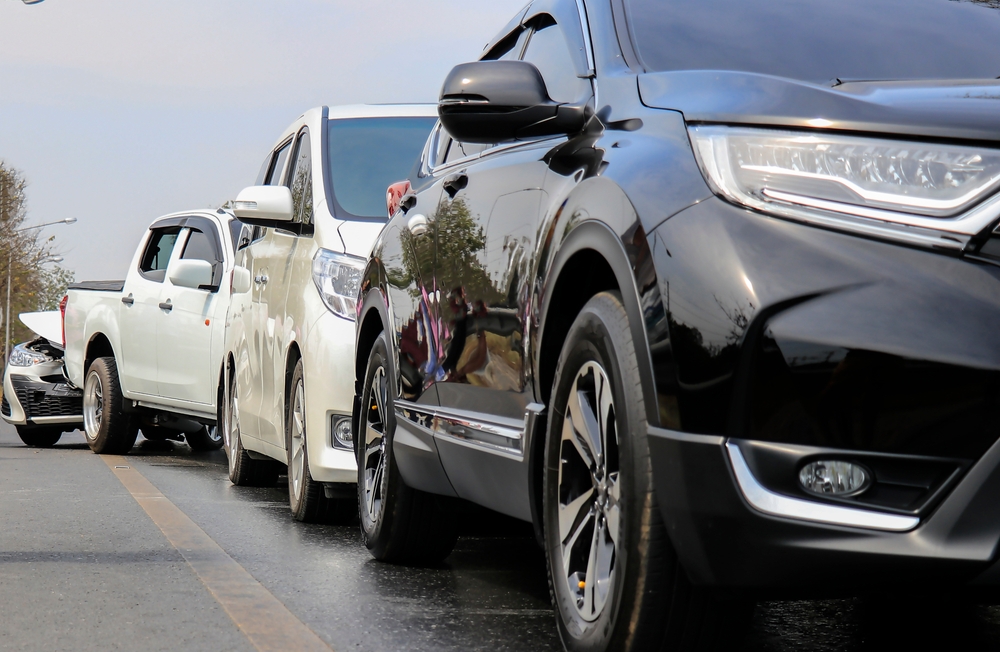
Navigating the roads of South Florida is a daily challenge for residents in Miami, Homestead, and Hialeah. Whether you are commuting on the Palmetto Expressway or navigating the dense traffic near PortMiami, the risk of a multi-car accident is always present. These chain reaction crashes are not just frightening. They are among the most legally complex cases we handle. When three, four, or even five vehicles collide, determining fault becomes a puzzle of competing statements, insurance disputes, and physical evidence.
A recent three-vehicle collision at Northwest 7th Street and 31st Avenue in Miami is a sobering reminder of how quickly a single mistake can spiral into a devastating pileup. In that incident, a pickup truck sideswiped one vehicle before crossing into oncoming traffic and striking another head-on, causing catastrophic injuries and loss. For victims and their families, the aftermath is often defined by confusion, emotional shock, and the urgent need to address medical bills, vehicle repairs, and lost wages. Understanding how the crash unfolded is often the first step in regaining control.
Chain Reaction Crash Mechanics
A chain reaction accident typically begins with a single impact that triggers a domino effect. For instance, if a driver abruptly swerves to avoid a hazard and forces another vehicle into your lane, that initial act of negligence can be traced as the primary cause for every subsequent collision. While the first driver often bears primary responsibility, they are rarely the only one whose actions are scrutinized.
These crashes frequently create what we call the sandwich effect. If you were the middle car in a three vehicle pileup, you may have been pushed forward into the car ahead of you after being struck from behind. To the front driver, it may appear that you caused the crash. To the rear driver, it may seem like traffic stopped too quickly. Sorting out these conflicting perspectives requires a detailed understanding of Florida law and the physical evidence left at the scene.
As Miami car accident lawyers at the Law Offices of Leonard J. Valdes, we look at every angle, from tire skid marks to the final resting positions of the vehicles, to reconstruct exactly what happened.
Proving the Chain of Causation in Secondary Collisions
In a multi-car pileup, the link between the first impact and the subsequent collisions is known as the chain of causation. Florida courts examine whether a driver’s initial negligence created a foreseeable sequence of events that led to your injuries. Determining which impact caused which injury is often the most challenging part of these cases, especially when later collisions are more forceful than the first.
Because our firm understands how different types of impacts affect the spine and soft tissues, we can correlate your medical findings with the forces involved in each collision. This level of detail is essential when multiple insurance companies attempt to shift responsibility onto secondary drivers.
These questions become even more complicated when the driver who triggered the chain reaction flees the scene, leaving victims without answers or basic information.
Accountability for Hit and Run Property Damage
In many of the multi-car pileups we see on the Palmetto or I-95, the driver who initiated the crash flees before information can be exchanged. This often leaves victims feeling as though they have no recourse for their damaged vehicle. However, the legal landscape for these victims has improved significantly this year.
As of October 1, 2025, Florida has implemented stricter rules regarding drivers who leave the scene of an accident. While hit-and-run laws have always been serious, the state’s updated laws give courts the ability to order mandatory restitution for property damage upon a driver's conviction, even in misdemeanor-level cases. This change is a major win for victims. It means that if the at-fault driver is caught, the court can order them to pay you back directly for your repairs as part of their sentence.
At the Law Offices of Leonard J. Valdes, we utilize every available resource, from subpoenas for surveillance footage to analyzing vehicle data, to help identify phantom drivers and hold them accountable under these strengthened laws.
Understanding Florida’s 51 Percent Fault Rule
Florida follows a modified comparative negligence standard. If you are found more than 50 percent at fault for a crash, you are barred from recovering compensation. In a multi-car pileup, insurance companies often try to use this rule to their advantage by exaggerating your share of responsibility. They may argue that you were following too closely, braking too late, or not maintaining your lane.
As Miami auto accident attorneys dedicated to protecting injured victims, our job is to ensure fault is assigned accurately and fairly. By identifying every negligent driver involved in the chain reaction, we work to keep your liability percentage as low as possible.
Why Medico-Legal Perspective Matters
What sets the Law Offices of Leonard J. Valdes apart is our ability to understand your injuries from both a medical and legal perspective. In a chain reaction crash, your body may experience multiple forces in rapid succession. These can include forward, backward, and rotational movements that create trauma patterns that can be easy to overlook.
With Mr. Valdes’ background as a licensed chiropractor, we recognize the signs of ligament damage, disc injury, and soft tissue trauma that may not appear on a standard ER X-ray. When insurance adjusters attempt to minimize your injuries, we use our medical insight to explain the biomechanics of the crash and ensure your condition is fully documented and clearly presented to a jury.
Proving Liability in Multi-Vehicle Accidents
Determining liability in a multi vehicle crash requires more than reviewing a police report. Officers do their best in chaotic conditions, but critical details can be missed when multiple vehicles are involved. To build a strong case, we go far beyond the initial report.
We gather digital evidence from Event Data Recorders, analyze surveillance footage from nearby businesses, and review dashcam recordings when available. We also correlate your medical findings with the mechanics of the crash to show which impact caused your most significant injuries. This combination of digital and medical evidence allows us to present a clear and compelling picture of what truly happened.
Who Actually Pays in a Multi-Car Accident?
In South Florida, the question of who pays is rarely simple. Because Florida is a no fault state, your Personal Injury Protection coverage will typically pay the first ten thousand dollars of your medical bills and lost wages. In a serious multi car pileup, that amount is often exhausted quickly. To recover compensation for pain and suffering, permanent injury, or expenses beyond your PIP limits, you may need to pursue claims against the at fault drivers.
This often means dealing with several insurance companies at once, each company attempting to limit its financial exposure. We handle these complex negotiations on your behalf, ensuring that your injuries are not minimized and that you are not pressured into accepting an unfair settlement.
Steps to Take After a South Florida Pileup
If you find yourself injured in a multi-car accident on a busy South Florida street, the steps you take in the first few minutes can define the outcome of any future claim.
- Call 911 immediately: A police report is essential in a chain reaction crash. The officer will document the positions of the vehicles and take statements from all involved parties while the details are fresh.
- Document the entire scene: Do not just take photos of your own car. Take wide-angle shots of the entire pileup, the surrounding traffic signs, and any skid marks on the road. This helps reconstruct the sequence of impacts.
- Identify witnesses: Oftentimes, drivers who were not involved in the crash but saw it happen from a distance provide the most valuable, unbiased testimony. Their perspective can be the key to proving fault.
- Do not apologize or admit fault: In the heat of the moment, it is common to say things like "I am so sorry, I didn't see you." It’s crucial to remember that an insurance company can use that apology to argue you are 51% at fault and deny your claim. Stick to the facts when speaking with the police.
- Seek a medical evaluation within 14 days: Even if you feel okay, adrenaline can hide serious injuries. Under Florida law, you must seek initial medical treatment within 14 days of the accident to preserve your PIP benefits. Missing this absolute deadline can result in a complete forfeiture of your claim, leaving you to pay for your medical bills entirely out of pocket.
How We Can Help You
At the Law Offices of Leonard J. Valdes, we are a small firm by design. We believe that personal injury should be just that: personal. When you call our office, you are not a case number in a massive database. You are a neighbor in our community who needs help during a difficult time. We bring a combination of legal strategy and deep medical understanding to every case we handle.
Whether you were hit on US-1 in Homestead or involved in a major pileup on the Dolphin Expressway, The Law Office of Leonard J. Valdes has the resources to investigate your crash and the dedication to see your case through to the end. We understand the specific challenges of South Florida traffic, the tactics used by local insurance adjusters, and local courts. We are not afraid to take your case to trial if that is what it takes to get you the justice you deserve.
Contact The Law Office of Leonard J. Valdes Today for a Consultation About Your Case
If you or a loved one has been injured in a multi-car accident, do not face the insurance companies alone. The road to recovery may be difficult, but we are here to guide you through every step of the process. We offer free, no-obligation consultations to discuss the specifics of your crash and help you understand your options for recovery.
Call us today at 305-701-4659, visit our office in Miami, Hialeah, or Homestead, or fill out our contact form to schedule a consultation. We work on a contingency fee basis, which means you pay nothing unless we win your case. Let us fight for the compensation you need to move forward with your life.
Disclaimer: The articles on this blog are for informative purposes only and are no substitute for legal advice or an attorney-client relationship. If you are seeking legal advice, please contact our law firm directly.